
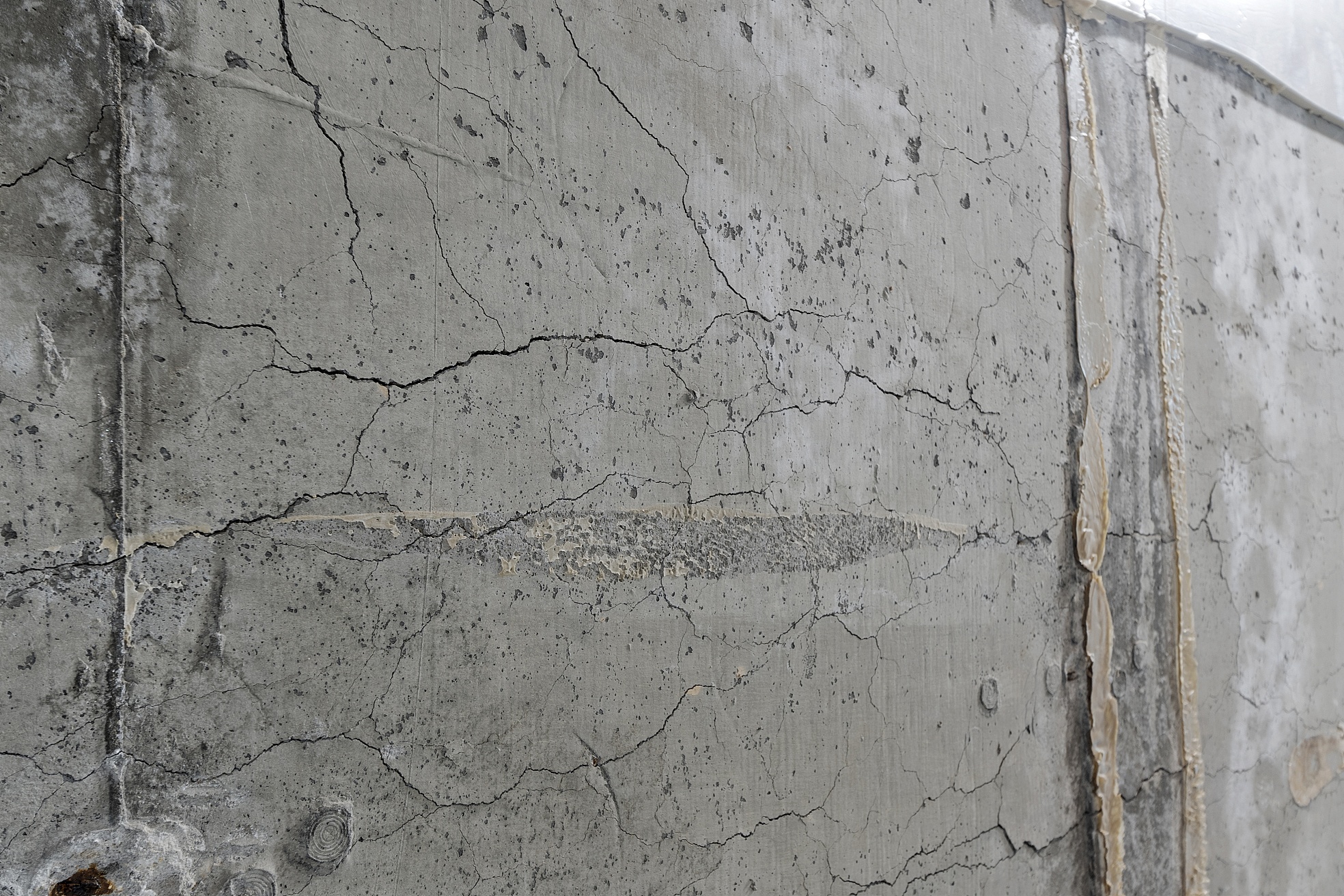
This is a BIG deal! If you’ve been around me at all in the past couple years, you’ve heard me trying to terrify people by educating them about the crumbling concrete foundations crisis in Massachusetts. I do this to raise awareness, and in doing so, hope to help three of my friends who have crumbling concrete foundations, and everyone else in the now 52 cities and towns (as of April 2026) that have at least one identified foundation affected by pyrrhotite. I’ve written several stories about this natural disaster happening right here in Massachusetts. The photo above is from a listing I had in Winchendon known (and disclosed) to have pyrrhotite. Once you’re up to speed on the issue, you’ll see why I consider it a big win to have a Crumbling Concrete Foundations Stakeholders group appointed at the state level.
Below is the link to the Final Report (and the full text of the report) of the Crumbling Concrete Stakeholder Working Group that was sent to the Massachusetts legislature in March 2026. This report is intended to give legislators a road map on ways to address the problem. Lawmakers still need to enact legislation to implement the recommendations they choose. Stay tuned for opportunities to help by reaching out to your local elected officials.
*If you’re new to the word pyrrhotite, or to the crumbling concrete foundations crisis in Massachusetts, here are some links to past stories I’ve written about it.
SEPTEMBER 2024 Original Story
Pyrrhotite: The Scariest Word in Real Estate Right Now
JUNE 2025 Update
Crumbling Concrete Foundations in Massachusetts, caused by Pyrrhotite
JULY 2025 Update
Progress on the Crumbling Concrete Foundations Crisis
SOURCE OF THE REMAINDER OF THE TEXT IN THIS STORY: MASS.GOV
LINK TO FULL REPORT: Crumbling Concrete Stakeholder Working Group Final Report
March 31, 2026
TEXT OF THE ABOVE LINK, FOR ACCESSIBILITY
“The Crumbling Concrete Stakeholder Working Group was established pursuant to Section 105 of Chapter 9 of the Acts of 2025 to develop recommendations addressing the deterioration of residential foundations caused by the presence of pyrrhotite in concrete aggregate.
The working group was convened by the Secretary of the Executive Office of Housing and Livable Communities (EOHLC) to evaluate the scope of the issue in Massachusetts and propose legislative, regulatory, and administrative strategies to support homeowners impacted by failing foundations.
The working group includes 17 members representing a range of perspectives, including impacted homeowners and community advocates, relevant state agencies and regulators, members of the Massachusetts Legislature, and experts in insurance, mortgage lending, construction materials, and municipal administration.
Working group membership
Ed Augustus (Chair), Executive Office of Housing and Livable Communities
Jason Robertson, Massachusetts Department of Transportation
Ross Seavey, Office of Consumer Affairs and Business Regulation
Jackie Horigan, Massachusetts Division of Insurance
Kevin Cuff, Massachusetts Division of Banks
Lisa Sears, Massachusetts Attorney General’s Office
Ann Refolo, Massachusetts Attorney General’s Office
James Murphy, Massachusetts House of Representatives
Paul Feeney, Massachusetts Senate
John Marsi, Massachusetts House of Representatives
Peter Durant, Massachusetts Senate
Michelle Loglisci, Massachusetts Residents Against Crumbling Foundations
Karen Riani, Massachusetts Residents Against Crumbling Foundations
Craig Dauphinais, Massachusetts Concrete and Aggregate Producers Association
Andrew Golas, Town of Charlton
Christopher Stark, Massachusetts and Rhode Island Insurance Federation
Darryl Caffee, Massachusetts Mortgage Bankers Association
Working group charge
Section 105 of Chapter 9 of the Acts of 2025 directs the Secretary of Housing and Livable Communities to convene a stakeholder working group to make recommendations for regulatory and legislative changes necessary to address the deterioration of residential foundations caused by the presence of pyrrhotite. Specifically, the working group was tasked with examining:
I. Which executive office, department, agency or bureau within an executive office, if any, is best equipped to administer a program to assist residential property owners impacted by the presence of pyrite or pyrrhotite or which executive office or department is best equipped to oversee a new agency or bureau;
II. Relevant models to assist impacted homeowners including, but not limited to, a captive insurance company, a supplemental loan program, an interstate agreement with a captive insurance company with expertise in assessing residential property foundation claims, property tax abatement and waiving local and state permit fees;
III. Models to assist impacted homeowners including, but not limited to: a. Insurance surcharges on certain homeowners’ insurance policies which shall not exceed $12 annually and when and on which policies the surcharge would apply; and b. Other sources of state and federal funding opportunities; and
IV. Methods to improve consumer protection through means including disclosures, appointment of a homeowner advocate within a department, agency or bureau to assist impacted homeowners and consumer education.
The working group is required to submit a report and recommendations to the Clerks of the Senate and House of Representatives, the Joint Committee on Environment and Natural Resources, the Joint Committee on Housing, and the House and Senate Committees on Ways and Means no later than March 31, 2026.
Timeline and methods
The working group first convened on October 23, 2025, and met several times as a full body while also conducting more frequent discussions through three specialized subgroups.
These subgroups were established to focus on key areas of policy development:
- The remediation subgroup, which evaluated approaches to foundation replacement programs.
- The lending subgroup, which examined financing mechanisms and possible solutions to support affected homeowners.
- The prevention subgroup, which explored regulatory and administrative reforms to prevent future occurrences of crumbling foundations.
Members of the working group also engaged in several fact-finding efforts to better understand the scope and impact of the problem. These efforts included: - Touring the home of an impacted Massachusetts resident to observe firsthand the effects of pyrrhotite deterioration on residential foundations.
- Consulting extensively with officials and program administrators from Connecticut, including representatives of the Crumbling Foundations Solutions Indemnity Company (CFSIC).
- Reviewing the results of previous Massachusetts studies and the findings of the 2019 Massachusetts crumbling concrete commission report.
- Examining policy approaches implemented in Canada and other states for similar challenges.
Through these meetings and consultations, the working group sought to understand both the technical causes of the problem and the range of policy tools available to address it. The recommendations contained in this report represent the consensus reached by the members of the Crumbling Concrete Stakeholder Working Group. They do not necessarily reflect the official positions of the Healey-Driscoll Administration, its constituent agencies, nor those of individual working group members. Rather, these are recommendations submitted to the Legislature by the working group as an independent advisory body for consideration and potential future action.
Executive summary
The deterioration of residential foundations caused by the presence of pyrrhotite presents a significant and growing challenge for homeowners, municipalities, and the Commonwealth of Massachusetts. This issue, which has been documented across at least 52 municipalities and likely impacts thousands of homes statewide, results in progressive and irreversible structural damage. Once deterioration begins, the only permanent solution is full foundation replacement, typically costing between $100,000 and $250,000 per home. These costs, combined with substantial declines in property values and the lack of insurance coverage, create severe financial hardship for affected homeowners and broader fiscal risks for municipalities. Though the total number of impacted homes is unknown, it is likely between 1,000 and 10,000 homes in Massachusetts.
The working group finds that private markets are not equipped to address this problem. Homeowners insurance policies overwhelmingly exclude coverage for pyrrhotite-related damage and traditional lending mechanisms are constrained by declining property values and the inability to underwrite loans against compromised collateral. These structural limitations result in a situation where individual households bear disproportionate risk, while private actors lack the tools or incentives to provide comprehensive solutions.
Given these conditions, the working group concludes that coordinated state intervention is critical. Without action, homeowners may face long-term housing instability, municipalities may experience erosion of their tax base, and the Commonwealth risks the loss of existing housing stock at a time of significant housing shortage. The issue also reflects a broader systemic failure in the construction materials supply chain, rather than isolated homeowner or contractor error, further underscoring the need for a collective response.
Massachusetts has taken initial steps, including funding for foundation testing, insurance protections, aggregate testing requirements, and strengthened inspection rights, but these measures alone are insufficient to address the scale of the problem.
To respond effectively, the final report recommends establishing a comprehensive remediation framework supported by a dedicated and sustained funding stream. The report outlines two primary programmatic approaches to remediation: a captive insurance program modeled after Connecticut’s existing program and a Massachusetts-based program administered by one of the quasi-governmental agencies like MassHousing, Massachusetts Housing Partnership, or Community Economic Development Assistance Corporation (CEDAC).
In addition, the report outlines additional options to support homeowners including supplemental and low-interest loan programs. In terms of funding, the final report recommends funding levels of $20 million to $30 million annually over a five-to-ten-year period, supported by a combination of potential revenue sources. This would enable substantial remediation efforts with the option for the legislature to extend or sunset the program as the extent of the need becomes clearer. In parallel, the report advances a series of prevention and consumer protection strategies, including enhanced professional education, improved material traceability, and expanded public awareness efforts, to reduce the likelihood of future occurrences.
Understanding the challenge
Across parts of the Northeastern United States, certain residential foundations built since the 1980s were constructed using concrete aggregate containing the mineral pyrrhotite, an iron sulfide that can react with oxygen and water over time. When pyrrhotite is present in concrete aggregate, the mineral can oxidize and expand, gradually weakening the concrete and causing internal cracking. Over time, this chemical reaction leads to progressive structural deterioration of the foundation, often beginning with hairline cracks that expand into large horizontal or spider-web patterns throughout the basement walls.
Unlike typical foundation settling or cracking, deterioration caused by pyrrhotite is irreversible. Once the reaction begins, the concrete will continue to degrade until the foundation is structurally compromised. The only permanent solution is complete replacement of the affected foundation. Foundation replacement requires lifting the home, removing the entire existing foundation, and constructing a new one. This process typically costs between $100,000 and $250,000 or more, placing it beyond the financial reach of most homeowners. Homeowners insurance policies exclude coverage for this type of damage because it is considered a material defect rather than a sudden or accidental event.
The scope of the problem in Massachusetts remains uncertain. Detecting pyrrhotite requires core sampling, which can cost several thousand dollars, or an inspection by a trained inspector once significant cracking appears. Some homeowners may be reluctant to test their foundations because confirmation of pyrrhotite can significantly reduce property values and many homeowners still don’t know if this is a potential concern for them to consider.
Nevertheless, known cases have been reported across multiple communities. Massachusetts Residents Against Crumbling Foundations has gathered reports from at least 52 municipalities in Massachusetts with one or more homes suspected or confirmed to contain pyrrhotite-affected foundations. Though the total number of impacted homes is unknown, it is likely between 1,000 and 10,000 homes in Massachusetts. Similar issues have been extensively documented in neighboring Connecticut, where 3,500-4,000 homes were affected and where the state ultimately implemented a comprehensive remediation program. Geologists have identified at least three other distinct sources of pyrrhotite that affect Massachusetts homes, in addition to the pyrrhotite source from Connecticut. A letter documenting all four sources is included in the appendix.
Why the private market cannot solve this problem alone The deterioration of residential foundations caused by pyrrhotite presents a unique challenge that traditional housing and insurance markets are not equipped to address. Several structural characteristics of the problem prevent private markets from providing adequate solutions for affected homeowners. Insurance market limitations Homeowners insurance companies usually do not cover damage caused by pyrrhotite related deterioration. Insurers generally categorize the issue as a latent construction defect or material defect, rather than a sudden or accidental loss. As a result, claims for foundation failure due to pyrrhotite are typically denied under standard policy exclusions, which has been upheld by the Connecticut Supreme Court.
ii
Lending and mortgage constraints
Homeowners with deteriorating foundations often face challenges with traditional mortgage and lending systems. While homeowners are technically eligible to refinance their mortgage with a lender or take advantage of a federal program like FHA 203(k), in practice, the few homeowners who have replaced their foundations have used savings or retirement funds to do so.
Mortgage lenders are reluctant to extend financing for foundation replacement when the underlying property value is considered compromised. In fact, many homeowners may be hesitant to disclose the extent of needed repairs to their lender or insurer due to concerns about potential impacts on their mortgage terms, insurance coverage, or access to credit.
Information and disclosure challenges
Many homeowners do not pursue testing for pyrrhotite unless visible deterioration has already begun. At the same time, the discovery of pyrrhotite significantly reduces property values and complicates future property sales. This dynamic creates a strong disincentive for homeowners to test their foundations, limiting the amount of reliable information available about the scope of the problem. Without clear data, private markets cannot accurately assess or price the associated risks. Taken together, these factors create a situation in which individual homeowners face catastrophic losses while the private market lacks the tools to provide adequate insurance, financing, or remediation programs.
Why state intervention is important
Given the limitations of private markets, public intervention is left to address the deterioration of residential foundations caused by pyrrhotite. Without coordinated action, many affected homeowners would face financial hardship, potentially resulting in longterm housing instability. Given the inaction of the federal government on this issue and the limited resources of most municipalities, this issue most clearly fits within state responsibilities.
Protecting homeowners from catastrophic loss
For many households, their home represents their largest financial investment. When a foundation begins to deteriorate due to pyrrhotite, the homeowner may face both the cost of replacement and a sharp decline in property value. Without assistance, families may be left in homes that are unsafe or unmarketable while still being responsible for their mortgage payments and property taxes. The impact of declining home values can leave residents trapped in their homes and unable to transition to more suitable accommodation as they age or their family grows.
Protecting municipalities from loss of revenue
The presence of pyrrhotite in a foundation has a direct fiscal impact on a municipality’s property tax revenues. Most towns allow taxpayers who have a crumbling foundation due to the presence of pyrrhotite to file for an abatement on their property taxes. The depreciation schedule can result anywhere from 20 to 100% of the property value. Since pyrrhotite is more concentrated in some smaller towns in Massachusetts, those communities have faced more fiscal pressure than others.
Preserving housing stock
Massachusetts faces a significant shortage of housing across many regions. The Massachusetts statewide housing plan, “A Home for Everyone”, estimated that the SouthCentral Massachusetts area alone needs an additional 20,500 housing units by 2035 to meet demand.
iii
Allowing homes with deteriorating foundations to become uninhabitable would further reduce the state’s housing supply and place additional pressure on already constrained housing markets. Supporting remediation of affected homes helps preserve existing housing units and maintain neighborhood stability.
Addressing a systemic construction issue
Unlike typical home maintenance challenges, pyrrhotite-related foundation failures stem from systemic issues in the construction materials supply chain. Individual homeowners had no practical ability to detect or prevent the use of defective aggregate when their homes were built. In fact, the issue of pyrrhotite was not known widely to people in the construction industry until well into the 2000s. Significant litigation has not found homeowners, insurance companies, homebuilders, contractors, or aggregate producers at fault. Much like a natural disaster, this challenge is hard to blame on any one party and thus requires a collective solution.
What Massachusetts is doing today
Massachusetts has taken several steps in recent years to better understand and address the issue of crumbling concrete foundations.
Foundation testing program
Since Fiscal Year 2019, the Commonwealth has provided funding to reimburse homeowners for core testing or structural engineer inspections of residential foundations to determine whether pyrrhotite is present. The program operates as a reimbursement program and has been funded through annual legislative earmarks. The state has funded $246,000 in core sample testing for concerned homeowners since FY19, covering 154 homeowners (as of the start of FY26). To date, everyone who has submitted an application for reimbursement for a core test or inspection has received one, although in FY26, the Division of Occupational Licensure was required to reimburse homeowners without receiving a funded earmark to do so.
iv
Initially, the program focused on homes located within a geographic radius of the J. J. Mottes Concrete Company in Stafford Springs, Connecticut, which had been linked to defective concrete used in residential construction. In subsequent years, eligibility was expanded to allow reimbursement for core testing and inspections across Massachusetts as concerns about other aggregate sources emerged.
Insurance protections
In 2021, the Massachusetts Division of Insurance issued a bulletin instructing insurers not to cancel, non-renew, or increase premiums on homeowners policies solely because a home may contain a foundation affected by pyrrhotite. This measure was intended to prevent homeowners from losing insurance coverage while policymakers evaluate longer term solutions. This protection has been vital for impacted homeowners to be transparent about their challenges with pyrrhotite and work on solutions without fearing other consequences.
v
Quarry testing regulations
On October 17, 2023, Governor Healey signed into law Chapter 56 of the Acts of 2023, “An Act relative to requiring the Highway Division of the Massachusetts Department of Transportation to establish a department and licensure process to oversee quarries producing concrete aggregate.” On September 12, 2025, MassDOT promulgated new regulations requiring testing of aggregate used in concrete production to detect the presence of pyrrhotite. Any entity selling concrete aggregate for use in Massachusetts (whether it is mined in Massachusetts or another state) is required to acquire a license and complete testing. These requirements aim to prevent defective aggregate from entering the construction supply chain and to reduce the likelihood of future cases of pyrrhotite.
vi
Inspection requirements
As part of Governor Healey’s Affordable Homes Act of 2024, HLC promulgated new regulations to protect prospective homebuyers by ensuring their right to obtain a home inspection is not unfairly waived, restricted, or undermined in residential real estate transactions. It prohibits sellers and their agents from requiring or encouraging buyers to waive their right to a home inspection as a condition for having their offer accepted except in limited, clearly defined circumstances. Before or at the signing of the first purchase contract, the seller or agent must provide a separate written disclosure affirming the buyer’s right to do a home inspection. This is a critical step when combined with some of the other recommendations in this report to minimize the risk of unsuspecting buyers purchasing a pyrrhotite-impacted foundation.
Property tax abatement
Municipalities are allowed to offer tax abatement to homeowners with crumbling foundations and many municipalities have set up programs to do so. As foundations are replaced, municipalities also have the flexibility to streamline permitting, waive local fees, and offer other small incentives that make the replacement process less painful. Previous study of the issue In 2019, Massachusetts convened a commission to study the problem of crumbling concrete foundations and identify potential policy responses. That report identified the presence of pyrrhotite in certain aggregate sources and highlighted the need for additional testing, consumer protection, and long-term remediation strategies. This initial report was essential to ground the findings of this working group, along with the ongoing research and advocacy of many of the initial commission’s members. The report is linked in the footnotes of this report.
vii
Understanding Connecticut’s approach
Connecticut has been at the forefront of responding to the pyrrhotite-related foundation failures in the United States. The core of their response has been a program called the Crumbling Foundations Solutions Indemnity Company (CFSIC). CFSIC is a state-chartered captive insurance company created to administer funding for the replacement of residential foundations affected by pyrrhotite. The organization operates as a nonprofit entity overseen by the Connecticut Insurance Department, along with an independent board of directors designated by the legislature.
The Connecticut program is funded primarily through two sources: - Approximately $300 million in state general obligation bonds (programming $25 million per year).
- A $12 annual surcharge on homeowners insurance policies through 2031 (generating roughly $11 million per year). Capitol Region Council of Governments in Connecticut also received a $2 million HUD
Community Project Funding earmark to support low- and moderate-income homeowners for costs not covered by CFSIC. Three insurers in Connecticut also made a one-time commitment in 2019 of $15.5 million total to support the CFSIC program, while liability litigation was still pending. Under the program, eligible homeowners may receive up to $205,000 in tax-free reimbursement for foundation replacement costs. The program primarily covers the cost of replacing the deteriorating concrete foundation itself, while additional low-interest loan programs are available to help homeowners finance related repairs and restoration work.
The program has a range of resources and supports to ensure the funds are well spent and prioritized, including: - Eligibility and damage verification. A licensed engineer evaluates a homeowner’s foundation to ensure that it has pyrrhotite and that a full replacement is required or appropriate. CFSIC uses these severity assessments to rate priority and timeline for replacement across three different severity levels. In addition, there are two types of claimants: Type 1 claimants, who need to replace their foundation, and Type 2 claimants, who require reimbursement for already replacing their foundation before the remediation program came into effect.
- Financial and oversight screening. CFSIC ensures that it is an owner-occupied property where the home insurance claim was denied and that the state of Connecticut is the payer of last resort.
- Contractor qualification. CFSIC controls and continuously evaluates who is approved to complete remediation work. Homeowners can choose from the list of pre-qualified contractors.
- Scope and construction oversight. CFSIC oversees the project scope and cost estimate to fit with their program cost guidelines, performs engineering and inspection reviews at key stages and makes payments directly to contractors at key stages, including a deposit, milestone progress and a final payment.
- Annual audits. CFSIC undertakes an annual external audit and publishes transparent financial records showing the usage of funds. Connecticut also provides financial assistance for diagnostic testing, offering 50% reimbursement for core testing, or 100% reimbursement for visual inspections used to determine whether further testing is necessary.
As of March 2026, Connecticut had deployed approximately $190 million in funding to remediate more than 1,500 homes affected by pyrrhotite deterioration. The Connecticut approach is a potential model for other states confronting similar problems. Connecticut’s legislature has continued to support this program over time, seeing positive results for residents without any scandals around waste, fraud, or abuse. The experience of CFSIC demonstrates both the scale of resources required to address the issue and the importance of establishing a dedicated administrative structure to manage testing, eligibility determination, remediation funding and contractor performance review.
Remediation options
The working group focused on three main options for a grant-style remediation program:
(1) joining CFSIC’s existing programs,
(2) creating a Massachusetts version with the same
model as CFSIC, or
(3) developing a new model within Massachusetts.
The working group deprioritized joining CFSIC because that would have created complications requiring
action from the CFSIC board and potentially the Connecticut legislature. The other two options are outlined below.
Massachusetts Foundations Solutions Indemnity Company (MFSIC)
This solution would create a model that broadly mirrors what Connecticut has been doing to support impacted homeowners since 2019. To do this, Massachusetts could use the CFSIC approach with a specific Massachusetts-based board of directors and enabling structure such that no approval from the Connecticut legislature or CFSIC board of directors would be required. This is how the process could work:
- Get legislative approval. Massachusetts passes legislation creating two entities:
MFSIC and a Massachusetts Crumbling Foundation Concrete Assistance Fund (CFCAF). - Establish the CFCAF entity. CFCAF would be a nonprofit trust incorporated in Massachusetts with a board consisting of a state official or group of officials from Massachusetts. This entity would receive funds from the Massachusetts legislature and then deploy them through the captive insurance company. The main two
ongoing roles for CFCAF would be to approve the annual audit of MFSIC and approve any changes to the board of directors of MFSIC. - Incorporate a captive insurer. MFSIC would be a captive insurance company incorporated in Connecticut and wholly owned by CFCAF. Captives are commonly used by healthcare systems, universities, and other systems to insure their own risks. Connecticut used a captive model because the state was paying for the
capital to remediate homes but still wanted the rigor of insurance-style claims evaluation. Twenty-seven states have captive enabling statutes, but Massachusetts is not one of them. Many large Massachusetts-based companies operate captives that are incorporated in Connecticut, Vermont, or other states. - Establish a board of directors. MFSIC would have a board of directors established by statute that would control the more detailed policies and operations of the board over time. Connecticut currently has a real estate agent, two owners of impacted residential buildings, the CEO of a city or town impacted by pyrrhotite, an investment advisor, the leader of the regional council of government, and representatives from the insurance and banking industries that do not have a direct interest in the programs. Connecticut House and Senate leaders also appoint four ex-officio designees to sit on the board. A similar model in Massachusetts could work well to ensure a broad spectrum of oversight.
- Hire a superintendent and consultants. MFSIC would be run day-to-day by a superintendent. MFSIC would conduct a search process to determine the best captive insurance management company or superintendent. The superintendent would then oversee a team of consultants including actuaries, claim managers,
captive managers, public outreach, legal services, and other services needed. By not having any full-time employees, MFSIC could get off the ground quickly and remain nimble as needs change. Auditing would be done by an external firm reporting directly to the board of directors. - Incorporate best practices. CFSIC has copyrighted their systems for training contractors, evaluating claims, and running their program. Their board is willing to share all their resources, guidelines, and manuals with MFSIC for a one-time royalty fee. While using CFSIC’s systems would not be required, it would save MFSIC
significant time in getting off the ground to gain access to a well-structured system, rather than risking delays or mismanagement from trying to develop a new approach from scratch. - Establish oversight. MFSIC would be subject to a range of oversight and regulation beyond the board. Connecticut has a claw back provision where the legislature can take funds back if needed, which Massachusetts could have as well. The Massachusetts legislature could also decide not to pass on funds to the entity at any time if it has concerns. MFSIC would be regulated by the Connecticut Insurance
Department for compliance with baseline Connecticut insurance requirements, but Massachusetts would set up additional reporting requirements to ensure oversight from the Massachusetts legislature and state officials.
Project costs and timeline of the MFSIC model
CFSIC paid out claims of $25 million to $30 million annually between 2023 and 2025 for foundation replacements. The professional and administrative fees to process those funds totaled $1.5 million to $1.8 million per year. Connecticut specified in statute that administrative fees should not exceed 10% and these fees represent about 4% annually. Once the operation is running, the working group anticipates that the MFSIC administrative costs would be comparable in the $1.5 million to $1.8 million range per year unless the
volume of claims payouts were dramatically higher or lower.
viii
In terms of timeline, the CFSIC administrator told the working group he thinks that this model could be stood up and paying out claims within one year of an enabling statute taking effect. The new entities would need to be incorporated and approved for operations. Importantly, the nonprofit trust would need to receive federal tax-exempt status before receiving funds. A new board of directors needs to be appointed, then MFSIC would need to open and consider applications, receive funding, and start disbursing claims. The exact timeline is to be determined, but if MFSIC is following the CFSIC model closely, it would likely enable the program to launch faster than any other option.
Opportunities for this model
There are three reasons this model is a strong option to consider: - It is a proven model. CFSIC has been widely praised as an effective and well-run solution for impacted homeowners in Connecticut. By having clear standards on prioritization for remediation, cost controls, and contractor approvals, CFSIC has made sure that remediation work is done with a high standard at a reasonable price.
- It could operate nimbly. Statutory programs in Massachusetts can sometimes become outdated or overly complicated for state agencies to deploy in practice. It can be difficult to anticipate at the outset of a program what the implementation needs and challenges will be. Using the administrator model, Connecticut is able to oversee the program while still providing flexibility to spend on different team needs over time.
- It can get off the ground quickly. Some homeowners have been waiting for over a decade for support from the state. Many are trapped in their homes because their equity is underwater. The CFSIC model would be the fastest to deploy resources and support homeowners as soon as possible.
Drawbacks of this model
This model also has a couple of potential drawbacks: - The administrative fee may be higher. Costs may be higher than if Massachusetts ran this program through one of its quasi-public government agencies. Although consultants provide nimbleness, they are often more expensive.
- Using a captive insurance model could add unnecessary complexity and regulation. There is no actual insurance or risk pooling being provided. Massachusetts has deployed other grant programs such as Climate Ready Housing or the Underutilized Properties Program that manage this sort of project-specific
funding.
Other factors to consider
If the legislature endorses this approach, it should enable MFSIC without overly prescribing program policies or details in the legislation. This ensures that the board of directors has the space to weigh trade-offs in detail and make decisions that can change over time as circumstances change, with strong input from the legislature.
In addition, it likely makes sense to establish a sunset provision for this fund. CFSIC is closing its claims application process in 2030. This gave impacted homeowners over a decade to test and apply for state support. The legislature and MFSIC could determine the right eligibility window to ensure that impacted homeowners receive support without saddling the state with an unfunded liability indefinitely into the future. For longer term claims, the State could set aside some portion of the funds to be paid out in certain
circumstances for homes with pyrrhotite foundations.
Finally, enabling legislation should consider whether some state fees should be waived to minimize the cost of replacing a foundation. Note that the State Senate proposed establishing a Crumbling Concrete Assistance Fund in its FY2026 Budget. The language of that approach is in the appendix.
Massachusetts Concrete Foundation Replacement Program (MCFRP)
This second possible solution would create a model that broadly mirrors the Connecticut model with all functions run through the Commonwealth. This model sets up an agency that is administered and run by a quasi-governmental entity, potentially Community Economic Development Assistance Corporation (CEDAC), MassHousing, or Massachusetts Housing Partnership (MHP). These agencies have experience administering
programs similar to the concrete remediation program outlined below. As quasigovernmental agencies under the Executive Office of Housing and Livable Communities, they have the nimbleness to adjust the program as needed, while maintaining a strong connection to Massachusetts state government. There would be a similar cost limit on administrative operations at 10% of the proposed Crumbling Concrete Assistance Fund. The agency would have the power to develop eligibility requirements and guidelines for
replacement of foundations affected by pyrrhotite. The agency would also have similar statutory duties as prescribed under the Connecticut enabling legislation.
These duties would include: - Publicly posting information regarding structurally sound concrete and the dangers of pyrite and pyrrhotite.
- Administration and oversight over the Crumbling Concrete Assistance Fund.
- Providing assistance to homeowners who are affected or have previously replaced their foundations.
- Assisting homeowners to obtain additional financing necessary to fully fund the replacement of concrete foundations that have deteriorated due to pyrrhotite.
- Approving contractors and other vendors for eligibility to perform foundation replacements on behalf of claimants.
- Disbursing financial assistance to approved contractors and other vendors.
- Ensuring that financial assistance is solely used for replacing concrete foundations that have been affected.
- Requiring the disclosure of any funds received for replacement of a foundation prior to receiving disbursement from the fund.
- Applying for any federal funds made available.
Project costs and timeline of the MCFRP model
The MCFRP model would mirror a lot of the same functions as the CFSIC model, but some of the processes and requirements might end up being different as the program is designed specifically for the Massachusetts context. Because of that, it may take 12 to 24 months to fully launch the program and have all of the systems in place. The annual cost to administer the program will need to be determined once the program details are fleshed out in more detail. The working group recommends establishing a cap of $1.5 million per year or 10% of annual fund disbursement, whichever is less, to enable the agency flexibility
and resources to execute the model well while still saving money compared to the MFSIC program.
Opportunities for this model
There are a couple of opportunities presented in the MCFRP model:
- Massachusetts-based design. Using this model allows Massachusetts to design a program that works for our context, while learning and building on what worked in Connecticut. While the Connecticut approach has worked well, there may be other models that work equally as well. By running the program in Massachusetts, there would be no regulation or licenses required from Connecticut to run the program
unless Massachusetts chose to purchase the IP from the CFSIC program. - The right level of flexibility. Quasi agencies have access to the resources and support of state government, but with more nimbleness than executive offices or departments. They are required to submit audits every year and should build out an advisory council to ensure there is stakeholder input on the program’s design.
Drawbacks of this model
There are, however, a couple of drawbacks as well: - It may take more time. As mentioned above, designing a new program would likely take longer to deploy funding, set up contractor vetting, and determine the best financial flows for the product. With upfront funding and priority focus from leadership, the program could be up and running sooner.
- Split focus. Each of the quasi agencies runs a wide range of programs. While paying for administrative costs would allow the agency to hire dedicated staff to run the program, it would be different than an entirely new entity focused solely on a concrete remediation program.
Massachusetts non-governmental approach to this model
If the legislature wanted to pursue an alternative to one of these quasi agencies, another option would be to create a nonprofit based in Massachusetts and subcontract with the states current Guaranty Fund manager or other third party administrator to operate a fund with similar structures and claims operating to CFSIC. This management company or TPA would be responsible for the management and operational frameworks that enable its member guaranty associations to discharge their statutory responsibilities to handle
promptly and efficiently covered claims against insolvent property and casualty insurers. The current Guaranty Fund managers are also authorized to furnish related or compatible services to property and casualty insurers and insurer organizations, and employs approximately 30 people in the Boston area. They, along with a set of contractors, could operate a program similar to CFSIC at a similar cost without needing to use a captive insurance structure specifically.
Financial sources for concrete remediation
To make progress on the backlog of impacted homeowners and build an economy of scale with setting up a full program of applications, contractor vetting, and more, the working group recommends funding this program at $20 million to $30 million per year over ten years. While Massachusetts is in a difficult fiscal environment, delaying action on this issue will only increase the cost to replace foundations and increase the risk of structural collapse. The final report has identified the following sources for the legislature to consider for funding the concrete remediation work: - Bond funding. Bond authorization for this program would also work as a source of revenue. Connecticut allocates $25 million per year from its authorization to CFSIC. A comparable allocation each year from the governor’s Capital Improvement Plan would work well for this program as long as it were consistent over time. Additional analysis by the Executive Office for Administration and Finance would need to determine whether the bonds issued would be taxable or not.
- Earmarks. While the full program should have a stable and consistent revenue stream, an initial earmark of $1 million would be important so that the infrastructure can be developed for this program to receive funds and the work can be started as soon as possible.
- Fee on concrete aggregate. Even though aggregate producers are not at fault for the pyrrhotite crisis, this would be a clear link between the concrete foundation crisis and the means to fund it. Charging $6 per cubic yard of concrete sold in Massachusetts would bring in about $19.5 million per year, based on an estimate of 3.25 million cubic yards sold each year.
ix
This would modestly increase the cost of any project involving concrete. For example, a new home typically uses 100 to 150 cubic yards of concrete, which would add about $600 to $900 to the project cost. Aggregate producers fear that homebuilders might switch to concrete alternatives in some cases if this fee were introduced and question why their industry should be singled out if there is no specific fault or misconduct on their part. - Homeowners insurance surcharge. Connecticut charges $12 per year whenever a homeowner secures or renews a homeowners insurance policy, which goes to funding their remediation program. If Massachusetts charged half of that fee at $6 per year, the state would collect about $10 million per year, based on an estimate of 1.7 million homeowners insurance policies in Massachusetts (including condos and homeowners, but excluding renters).
x
If it charged $12 per year, the state would collect about $20 million per year. While the state should be mindful of the implications of adding new surcharges or fees, especially at a time when consumers are already facing significant affordability challenges, this equates to $0.50 to $1.00 per month for a set period of ten years and would enable the remediation program to be funded without requiring general revenue - Line-item appropriation. Providing a source of revenue through the legislature’s annual budget process is always an option. The Legislature would need to appropriate $20 million to $30 million per year for five to ten years to make significant progress on the challenge.
The potential and limitations of federal funding
Securing federal funding for this work remains difficult. Under the Robert T. Stafford Disaster Relief and Emergency Assistance Act (42 U.S.C. § 5121 et seq.), a state’s governor must submit a formal request that the president must approve before the Federal Emergency Management Agency (FEMA) can provide aid for natural disasters.
Former Connecticut Governor Dannel Malloy requested a major disaster declaration but was denied because crumbling foundations and other slow‑moving natural disasters like drought and sea‑level rise are not eligible for FEMA assistance under current law. There have been recent unsuccessful attempts by members of the Massachusetts congressional delegation to create a carveout that would deem crumbling foundations
caused by pyrrhotite eligible for FEMA funding. Additionally, members of the delegation have supported reinstating the casualty loss tax deduction so that out‑of‑pocket concrete remediation costs could be deducted from taxable income. Proposals have included allowing residents to amend their federal tax returns retroactively to 2018, when the Tax Cuts and Jobs Act eliminated the deduction, extending beyond the usual three‑year limit for amended returns.
Funds from the Community Development Block Grant (CDBG) program and the HOME Investment Partnerships Program can support testing and remediation of homes with crumbling foundations, but only in communities that qualify for those funding streams and it would require those municipalities to prioritize scarce local funding for these expensive projects.
Finally, members of the Massachusetts congressional delegation could pursue a one‑time federal earmark to support a regional testing and remediation program. This may require creating or partnering with a tax-exempt entity to serve as the recipient. Eligibility rules for federal earmarks change annually and differ between the House and Senate.
Lending options
When assessing lending options in today’s market, individuals may encounter constraints due to lenders’ requirements regarding the structural integrity, safety, and soundness of the property serving as collateral. Lenders are typically unable to extend credit for properties with unresolved foundation issues until such repairs are completed, with limited exceptions like construction or renovation loans, which generally feature interest rates above prevailing market levels.
Another important factor is the individual’s equity in the collateral. For standard financing products, properties with deficiencies related to structural integrity, safety, and soundness are generally considered to have no lendable value until appropriate remediation occurs; such assets are often appraised on a “subject to” repair basis. Conversely, certain products, such as construction or renovation loans, evaluate collateral and establish equity based on proposed plans and specifications, allowing the use of projected “as built” or “as repaired” values when determining collateral values. Accordingly, the lending subgroup recommends the creation of products that assess property value based on the “as built” or “as repaired” value.
As a result, the focus for this section is on two different use cases. If a homeowner is eligible for a remediation program, a supplemental lending program can be an important tool to finance costs that are not directly covered by the foundation replacement such as repairing the driveway, fixing the lawn, or replacing a sewer line. Connecticut offers the Supplemental Collapsing Foundation Loan Program, which is a loan-loss guarantee fund encouraging banks to offer loans for these uses. The program offers up to $75,000 to individuals who receive a new foundation through CFSIC at interest rates of 3 to 5%.
For individuals that are not eligible for a remediation program, a broader low or no-interest loan program could be another option for Massachusetts to offer for the full replacement of a foundation. Banks approached by homeowners are often unwilling to offer home refinancing or second lines of credit to fund a foundation replacement since the collateral is compromised. In other words, even if homeowners wanted to take on additional debt to do the replacement themselves, it would be hard to get financing without securitizing against other assets or facing extremely high interest rates. Because Connecticut offers a robust remediation program, it does not offer support for any lending product for the full cost of foundation replacement. Although the working group believes the best solution is to fund a remediation program, it has outlined two options for a larger lending program if the legislature is unable to fund a full remediation program.
Supplemental loan program
The Connecticut Housing Finance Authority has provided a $2 million loan-loss guarantee fund for private lenders participating in the Supplemental Collapsing Foundation Loan Program, which was capped at $20 million. This provided a backstop for private lenders but required them to offer loans at lower rates than they may have offered with their own underwriting standards. As a result, while some lenders have participated in the program, as of the report writing, no private banks are currently offering supplemental loans to homeowners receiving CFSIC assistance. Private banks generally will only participate in a program if they are able to make enough money from interest repayments, origination fees, or other funding that pay for the cost of issuing loans.
In order to ensure that a program like this works in Massachusetts, a quasi-agency like MassHousing, Massachusetts Housing Partnership, or CEDAC would likely need to offer some combination of a higher guarantee fund, allow banks to charge higher interest rates, or provide some other subsidy.
Resources required to operate the program
This would likely require a limited amount of funding from the legislature to guarantee and administer a program like this by a state quasi agency. The quasi agency could use a portion of the funds allocated for the remediation program to support this program.
Low-interest loan with monthly repayments
This option would entail a quasi-governmental agency guaranteeing or offering low-interest loans for homeowners to replace their foundation. This mechanism would require fewer resources from the state, since it would ultimately receive payback for most of the loans provided. It could provide some relief and support to homeowners who have higher incomes or property values but cannot access existing lines of credit or face high interest rates. Any loan program would need to make sure that it had appropriate consumer protections in place.
Resources required to operate the program
Depending on whether this program involved direct lending from a quasi or an incentive for private lender participation, the program would likely need about $100 million in lending capacity. Ultimately, the funds returned to the state could be put back into other state programs or priorities once they are repaid.
Low-interest forgivable loan
Another option to consider is a low-interest loan that is paid back at the point of sale or transfer for the property. The program could be structured such that the loan is forgivable up to the negative equity amount. After the property is sold and the mortgage is repaid, any remaining funds would go back to the state loan program. If the loan were fully repaid, then any remaining equity would go to the home seller. This approach would enable any impacted homeowner to replace their foundation. In practice, this would likely look like the state paying the contractor directly and then placing a lien on the property. It would cost
the state less but be less generous to homeowners.
With the traditional remediation program, a home could have $100,000 of negative equity, receive a $200,000 grant payment, and then ultimately sell the property for a gain of $100,000. Using this low-interest forgivable loan approach, if a home had $100,000 of negative equity, the state would pay for the $200,000 foundation replacement, but then at sale, the state would receive $100,000 paid back, while forgiving $100,000 of the loan cost.
The impacted homeowner would lose out on the upside of selling their home for positive equity unless the home appreciated significantly, but they would be able to remediate their home without needing to pay out of pocket.
Resources required to operate the program
A state quasi agency would likely need to operate this program directly. It would likely require $20 to $30 million in dedicated funding each year using the sources listed in the remediation section to operate since the timing and amount of repayment would be uncertain. However, the cost per house remediation would ultimately be lower and any repaid funds after the crisis is over could be put towards the Commonwealth’s Affordable Housing Trust Fund or another key state priority.
Pyrrhotite prevention and further regulation
While the sections above focused on support for homeowners who are impacted by pyrrhotite in their foundations, this section focuses on prevention and regulation to ensure that stakeholders across Massachusetts know about this problem and that we minimize future harm to homeowners. A defining feature of the pyrrhotite crisis has been the difficulty of identifying and tracing the source of defective concrete. Historically, concrete batch documentation has not been retained by local building departments, and homeowners frequently lack records indicating where aggregate materials originated. This absence of traceability has complicated consumer protection efforts, delayed diagnosis, and hindered enforcement and remediation.
The crisis has also revealed uneven levels of awareness among professionals who play critical roles in real estate transactions and construction oversight. Real estate brokers, home inspectors, and local building officials are often on the front lines of identifying potential risks, yet many receive limited or no formal training on pyrrhotite, warning signs, or appropriate consumer disclosures. As a result, affected homes may be sold without adequate testing or disclosure, transferring significant financial risk to unsuspecting buyers.
Despite years of advocacy by impacted homeowners and some public officials, public awareness of pyrrhotite remains limited outside of the most heavily impacted regions. Many homeowners are unaware of the risks, the availability of testing, or the existence of state support until substantial damage has already occurred. This lack of awareness increases long-term costs to homeowners and the commonwealth alike.
Together, these challenges underscore the need for a more coordinated, preventive, and education-driven response—one that embeds pyrrhotite awareness into professional standards, aligns state regulatory systems, improves documentation and traceability, and ensures clear, accessible public information.
Introduce continuing education requirements on pyrrhotite
The Commonwealth could require continuing education on pyrrhotite for licensed professionals who play a central role in residential construction and real estate transactions, including all real estate professionals, home and building inspectors, and other relevant licenses as determined by their respective boards. Specifically, every real estate professional and home inspector could be required to take training on pyrrhotite ahead of their next license renewal. This training should cover best practices for identifying potential pyrrhotite risks, understanding appropriate testing protocols, communicating risks to consumers,
and complying with disclosure obligations. Incorporating this content into existing continuing education frameworks would raise baseline competency across professions without creating new licensure barriers.
Even for real estate professionals or inspectors who are not primarily working in hotspot regions, knowing about this challenge is critical, as the full scope of the crisis statewide is unknown at this time. By ensuring that professionals who advise homeowners and buyers are properly informed, the state can reduce preventable harm and improve early detection.
Real estate brokers and salespersons are required to complete twelve hours of continuing education per two-year renewal cycle. Massachusetts General Law Chapter 112, Section 87XX 1/2 provides some specific direction on continuing education requirements. Home inspectors are required to complete twelve continuing education hours per renewal cycle as well. Chapter 112 Section 223 authorizes the Division of Occupational Licensure (DOL) to broadly set these standards.
Beyond these continuing education requirements, the Massachusetts Municipal Association, the Citizen Planner Training Collaborative, and other professional associations should offer trainings for municipal leaders to ensure that they are providing the latest information to homeowners in their area.
Implementation Pathway: Relevant continuing education requirements are determined by a combination of Massachusetts General Laws, regulation, and administrative action by the licensing boards. Requiring pyrrhotite training to be included could be accomplished through a range of different administrative or regulatory changes. However, including a directive in crumbling concrete legislation that “all applicable
Massachusetts boards of licensure shall require pyrrhotite continuing education for license renewal in a matter determined by the board” would ensure that this occurs. This would direct action from agencies, while allowing for individual boards to determine what specific training is needed and how often it should be required.
Incorporate MassDOT aggregate licensure standards into the state building code
In Massachusetts, the current concrete aggregate testing and licensing regime is structured as an aggregate-source regulatory program administered by the Massachusetts Department of Transportation (MassDOT). The statutory foundation was established by Chapter 56 of the Acts of 2023, which inserted Section 79 into Chapter 6C of the General Laws. Section 79 requires any person seeking to mine, extract, or otherwise operate a quarry, sand and gravel operation, or other aggregate source for the purpose of producing “concrete aggregate” to obtain a license from MassDOT. The statute makes clear that its scope is limited to aggregate intended for use in cement concrete for foundations, structural elements, or infrastructure, including roadways and bridges. It does not apply to aggregate produced solely for other non-concrete purposes. As part of licensure, the statute requires submission of an operations plan, a geological source report prepared by a licensed professional geologist, and aggregate testing that must include testing for pyrrhotite, including a total sulfur test conducted by an accredited laboratory.
MassDOT implemented this statutory mandate through the adoption of regulation 700 CMR 19.00. The regulation establishes detailed requirements for licensure, including the contents of the operations plan, standards for geological source reports, and specific testing and documentation requirements addressing sulfur, pyrrhotite, and framboidal pyrite in concrete aggregate. Together, the statute and the regulation form a comprehensive regulatory program governing Massachusetts-based aggregate mines that are producing aggregate for use in cement concrete within the Commonwealth, even if they are mining in other states.
As of the writing of this report, fewer than 30 licenses have been granted in the first year the regulations have been in effect.
xi
While participation is expected to continue increasing over time, it remains important to amend the Massachusetts Building Code to require the MassDOT aggregate license for all concrete. Without a building code hook, the MassDOT program operates upstream of construction and is not directly enforceable at the point when concrete is poured for one- and two-family homes.
Under the current framework, a jurisdictional gap exists between material regulation and building code approval. State law authorizes MassDOT to license aggregate sources producing concrete aggregate and to require testing for sulfur, pyrite, and pyrrhotite, but it does not require local building officials to verify that concrete used in residential and commercial construction is derived from a licensed and compliant source. The Massachusetts Building Code governs permitting and inspections for all buildings, including one- and two-family dwellings, and specifies material standards but not source licensing requirements. As a result, a building inspector may lawfully approve a foundation pour without any mechanism to confirm compliance with the MassDOT aggregate licensing program. Integrating or cross-referencing these requirements into
the building code would clarify enforcement responsibilities, reduce uncertainty for builders and inspectors, and establish a coherent end-to-end regulatory framework that fully carries out the legislature’s intent.
Implementation Pathway: The Board of Building Regulations and Standards (BBRS) has a subcommittee focused on structural material changes to the building code and will work to incorporate this technical change when the next edition comes out.
Require submission and retention of concrete batch tickets
A key challenge of the pyrrhotite crisis has been the inability of homeowners or commercial purchasers to determine where their concrete was sourced and who poured the foundation. This information is not typically kept with other home records and so it is challenging or impossible to track that information down.
Batch tickets are a critical accountability tool when pouring new concrete foundations because they provide a contemporaneous, verifiable record of what materials were delivered to a specific site and when. A batch ticket documents the concrete producer, aggregate source location, plant location, mix design, quantities, time of batching, and delivery information, creating a direct chain of custody from material source to placement. This information allows building officials, engineers, and homeowners to confirm that the concrete used for a foundation matches the approved specifications and was produced using compliant aggregate sources.
In the event of a future defect or structural concern, batch tickets make it possible to trace the concrete back to the supplier and aggregate source, enabling targeted investigation and remediation rather than speculative or destructive testing years after construction. Including batch tickets as a required part of foundation pours also strengthens enforcement and consumer protection by closing a common documentation gap at the point of construction. Without batch tickets, there is no reliable way for inspectors or owners to confirm that compliant materials were actually delivered to a site, even where upstream licensing and testing requirements exist.
Requiring batch tickets aligns residential construction practice with industry standards already common in commercial and infrastructure projects and creates a durable record that persists beyond final inspection. This documentation requirement supports quality control, deters substitution of noncompliant materials, and provides long-term protection for homeowners by ensuring that responsibility for concrete performance can be clearly assigned if problems emerge.
Implementation Pathway: While the batch ticket requirement could be addressed through legislation, it is more direct and administratively efficient to implement through a change to the building code as adopted by the BBRS. There are still some details of the process that need to be further determined, such as when the batch ticket would be checked, who is responsible for retaining those records, and what specific information should be required. The goal of the batch tickets is to ensure that all new concrete poured is traceable and compliant with state testing requirements without causing significant delays to homebuilding in Massachusetts.
Launch a statewide public education campaign on pyrrhotite
Despite ongoing efforts by advocates and state agencies, public understanding of pyrrhotite remains limited. A state agency should run a public education and awareness campaign to inform homeowners, homebuyers, and professionals about the risks associated with pyrrhotite and the steps individuals can take to protect themselves. This campaign should include clear guidance on testing, disclosure obligations,
available assistance programs, and the statutory right of home purchasers to obtain inspections.
In addition, the Commonwealth should maintain a centralized, easy-to-navigate webpage explaining the pyrrhotite crisis, available resources, and recommended actions for affected and at-risk residents, either posted on the website of the agency implementing a concrete remediation program. Improved public awareness can reduce costly missteps, prevent uninformed transactions, and encourage earlier testing and intervention.
Implementation Pathway: This action could be taken by administrative action with existing agencies. Legislative appropriations would help the campaign to increase its reach.
Encourage pyrrhotite testing for remediation eligibility
Even with ongoing education and public awareness campaigns, there is a real risk of homeowners buying a house with a pyrrhotite-impacted foundation that leaves them underwater on their mortgage. A core test can cost $2,000 to $5,000 and take several weeks to receive analysis back from a lab on whether a concrete foundation has pyrrhotite. Requiring this test statewide may be impractical, but there should be incentives for suspected homes to test for pyrrhotite.
One option to consider would be a pyrrhotite disclosure similar to the lead disclosure currently in place. As part of a home sale, Massachusetts could require a disclosure form to be signed for any home built between 1980 and 2026 that says the seller has or has not tested the foundation and pyrrhotite has or has not been identified. This would raise the visibility of the challenge for potential buyers. This notice could be phased out once a remediation program is in place.
The state could also consider two options that Connecticut currently pursues. First, any home purchased after the remediation program is in place would be ineligible for remediation grant funding if they did not test for pyrrhotite at the time of purchase. This creates a strong incentive for homeowners to make sure that they are testing or doing an inspection if there is any reason for that risk. Second, foundations that are replaced by a remediation grant could be tested to ensure that there is no pyrrhotite. While this would add time and cost to the remediation process, Connecticut pursues this path because impacted homeowners often want to be absolutely sure that their new foundation is safe and not impacted.
Implementation Pathway: The first option to create a pyrrhotite disclosure would require legislative action. The second two options could be done through administrative actions by the agency implementing the remediation program.
Conclusion
The deterioration of residential foundations due to pyrrhotite represents a slow-moving natural disaster impacting thousands of residents across the state. Without decisive and sustained action, affected homeowners will continue to face significant financial hardship, municipalities will experience ongoing fiscal impacts, and the Commonwealth of Massachusetts risks further strain on its already limited housing supply.
The recommendations set forth in this report are designed to provide a comprehensive and balanced approach that addresses immediate remediation needs while also establishing long-term safeguards to prevent recurrence.
While the precise structure of the program may be determined through the legislative process, the core components of both financial assistance for foundation replacement and proactive measures to improve awareness and accountability are essential to an effective response. Timely action will not only provide relief to impacted homeowners but also protect the long-term stability of Massachusetts communities and housing markets.
Appendix
_______________________________________________________________________________________________________
Letter from Concrete Research and Testing
Subject: Petrographic Examinations of Massachusetts Pyrrhotite-Bearing Reactive Aggregates Concrete Research & Testing (CRT) was asked by Michelle Loglisci to document the currently known pyrrhotite-bearing reactive aggregate used for residential foundations in Massachusetts. CRT has been heavily involved in the petrographic examination of residential foundations showing distress related to the presence of pyrrhotite-bearing aggregate in both Connecticut and Massachusetts since 2008. CRT has examined cores
from more than several hundred of these foundations.
During the first International Conference on Iron Sulfide Reactivity (ICISR 2024) I presented a paper titled “Petrographic Examination of Concrete Aggregates Involved in Iron-Sulfide Reactions in Residential Concrete Foundations in Connecticut and Massachusetts”. This paper detailed the lithology of the aggregates from the Becker Quarry in Connecticut and the Rutland Quarry in Massachusetts (a copy of the paper is attached).
The first homes detected with this problem in Massachusetts were located in southcentral Massachusetts and were all related to aggregate derived from the Becker Quarry in Connecticut. In more recent years, many homes in central Massachusetts have been found to have defective concrete foundations although aggregate from these homes was determined to be from a quarry in Rutland, Massachusetts. The Becker quarry supplied both crushed stone and natural gravel, while the aggregate from the Rutland Quarry is a
crushed stone.
More recently homes (or condos) in the northern part of the state have been found to have defective concrete foundations. Concrete samples that I have examined in the areas of Winchendon and Dracut have shown the presence of pyrrhotite-bearing reactive coarse aggregate. The coarse aggregate in these two structures are both crushed natural gravel aggregates, although show significant differences in lithology (they contains different rock types). This would indicate that there are at least two more additional sources of reactive pyrrhotite-bearing aggregate in the northern part of the state that were used in the construction of residential foundations. I will soon be receiving samples from a foundation in Ashburnham that was recently removed due to the defective concrete.
Attached are photographs showing cross-section views of the sectioned concrete samples containing the reactive aggregates from the Rutland Quarry and the Winchendon and Dracut foundations. Photomicrographs showing examples of the reactive aggregate are also provided.
In conclusion, there are currently four known distinct sources of reactive pyrrhotite bearing aggregate that were used for the construction of residential foundations in Massachusetts.
1) Crushed stone/crushed natural gravel from the Becker Quarry – Supplied to south-central Massachusetts 2) Crushed Stone from Rutland Quarry – Supplied to central Massachusetts
3) Crushed Natural Gravel – Supplied to northern Massachusetts (Dracut area)
4) Crushed Natural Gravel – Supplied to northern Massachusetts (Winchendon area)
Nick Scaglione, President & Petrographer Concrete Research & Testing, LLC
___________________________________________________________________________________________
Creating the Massachusetts Crumbling Concrete Assistance Fund (CCAF)
The Massachusetts Senate has previously adopted language in the Senate version of the FY2026 Budget (S.2525) that would establish this fund (“Crumbling Concrete Assistance Fund”) under Chapter 29 of the General Laws.
This fund would be credited with:
- Appropriations or other money authorized by the general court that is specifically designated to be credited to this fund.
- Funds from private and public sources, including but not limited to gifts, grants, donations, and settlements.
- Federal funds made available by the United States Department of Housing and Urban Development Section 108 Loan Guarantee Program.
- Interest earned on the assets of the fund. The funds that are disbursed can be used to:
- Provide financial assistance to owners of real residential property that have deteriorated due to the presence of pyrite or pyrrhotite.
- Minimize negative fiscal impacts on municipalities in which such property is located.
- Reimburse the owner that presents satisfactory evidence that they have previously repaired and replaced their foundation affected by pyrite or pyrrhotite prior to the establishment of the fund.
Under the language that has been previously passed by the Senate, any amounts that were issued from the fund to impacted homeowners for the repair or replacement of concrete foundations that have deteriorated due to the presence of pyrrhotite would be exempt from taxation under Chapter 62 of the Massachusetts General Laws.
Annually, the Secretary of Housing and Livable Communities would report on the activities
of the fund from the previous calendar year to the clerks of the House of Representatives and the Senate, the Senate and House Committees on Ways and Means, the Joint Committee on Environment and Natural Resources, and the Joint Committee on Housing.
Full language of this proposal:
SECTION 30. Said chapter 29 is hereby further amended by inserting after section 2JJJJJJ the following 3 sections:
Section 2KKKKKK. (a) There shall be established a Crumbling Concrete Assistance Fund which shall be administered by the secretary of housing and livable communities. The fund shall be credited with: (i) appropriations or other money authorized by the general court and specifically designated to be credited to the fund; (ii) funds from public and private sources, including, but not limited to, gifts, grants, donations and settlements received by the Commonwealth that are specifically designated to be credited to the fund; (iii) federal funds received under subsection (b); and (iv) interest earned on the assets of the fund.
Amounts credited to the fund shall be expended, without further appropriation, to:
(A) provide financial assistance to owners of residential real property for the repair or replacement of concrete foundations of such residential real property that have deteriorated due to the presence of pyrite or pyrrhotite;
(B) minimize negative fiscal impacts on municipalities in which such property is located; and
(C) reimburse the owner of a residential real property that presents satisfactory evidence, as determined by the secretary, that said owner has paid for and replaced their concrete foundation that deteriorated due to the presence of pyrite or pyrrhotite prior to the establishment of the fund; provided, however, that the reimbursement shall not exceed the funding the owner would have received had they applied for financial assistance through the fund. The unexpended balance in the fund at the end of a fiscal year shall remain available for expenditure in subsequent fiscal years. No expenditure made from the fund shall cause
the fund to be in deficit at any point.
(b) The secretary of housing and livable communities may apply for, receive and deposit any federal funds, including, but not limited to, funds made available by the United States Department of Housing and Urban Development Section 108 Loan Guarantee program, into the fund. The secretary shall seek to maximize available federal reimbursements for money spent from the fund.
(c) Amounts issued from the fund to impacted homeowners for the repair or replacement of concrete foundations that have deteriorated due to the presence of pyrrhotite shall be exempt from taxation under chapter 62.
(d) Annually, not later than June 1, the secretary of housing and livable communities shall report on the activities of the fund from the previous calendar year to the clerks of the senate and house of representatives, the senate and house committees on ways and means, the joint committee on environment and natural resources and the joint committee on housing.
(e) The secretary of housing and livable communities shall promulgate regulations or issue other guidance to set rules for the expenditure of the funds under this section.”
i https://www.mass.gov/info-details/crumbling-concrete-stakeholder-working-group
ii https://www.hurwitzfine.com/blog/connecticut-supreme-court-requires-imminent-danger-of-collapse-forcrumbling-concrete-coverage
iii https://www.mass.gov/info-details/central-massachusetts-housing-snapshot
iv Massachusetts Division of Occupational Licensure
v https://www.mass.gov/doc/bulletin-2021-12-crumbling-foundations-due-to-high-concentrations-ofpyrrhotite-in-home-construction-issued-october-6-2021/download
vi https://www.mass.gov/info-details/aggregate-source-licensing-for-the-production-of-cement-concrete
vii https://malegislature.gov/Bills/191/HD4724
viii https://crumblingfoundations.org/wp-content/uploads/2025/12/CFSIC-2025-AFS-Final.pdf
ix Massachusetts Concrete Aggregate Producers Association Estimate
x https://www.mass.gov/doc/the-2024-massachusetts-market-for-home-insurance/download
xi https://www.mass.gov/info-details/aggregate-source-license-list-for-cement-concrete-700-cmr-1900