
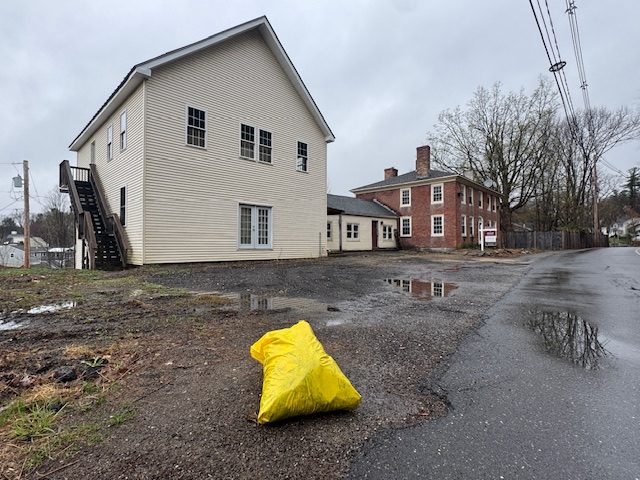
What’s going on in the Central Massachusetts real estate market in May 2026? My husband has been telling me I have more going on right now than I’ve ever had, and I guess I can’t argue with him. It doesn’t feel as hectic as it did during Covid — but when I look at my calendar and the conversations I’m having every single day, he’s right. Potential sellers, downsizers, upsizers, people who moved here during Covid and are ready to move again, multi-generational buyers, relocation buyers, first time buyers and your everyday vanilla sellers. The activity is constant.
The Market Is Moving — When the Price Is Right
Houses that are priced correctly are STILL selling quickly — and in some cases, STILL selling significantly above asking price. My approach has always been to aim for the highest price I can justify without crossing the line into overpriced territory. I’m equally opposed to underpricing and overpricing — and here’s why that matters, even when I’m representing sellers: I think it’s the most fair to both buyers and sellers, and frankly, it’s what actually serves my sellers best.
Consider the alternatives. Some agents price a listing low deliberately — not for your benefit, but to generate a crowd of buyers they hope to convert into future clients. That’s not a pricing strategy, that’s prospecting at your expense. Others simply agree with whatever high number the seller wants to hear, just to win the listing. That’s not a strategy either — that’s a guess (or desperation) dressed up as flattery. I hate that because I do lose listings to that–but Jay reminds me that if I couldn’t get someone to listen to reason in the beginning, that might be the roadmap for what it’s like working with them throughout a listing and transaction. And if every one of my listings sold significantly over asking, what would buyers think? They’d stop coming. Why bother engaging with a listing if the stated price isn’t even real?
My approach is to price your property at a number you’d be genuinely satisfied with if you received just one offer — because that does occasionally happen. You’re presenting the product at a reasonable, defensible price, and then letting buyer demand do with it what it will. It’s a strategy, not a guess.
And another thing — if I sell your home and you walk away with $25,000, $50,000, or $75,000 more than you anticipated, I’m not going to be blasting that all over social media. That’s your win, not my marketing content. But if you’re thinking about selling and want to speak directly with past clients about my pricing and marketing process, I will happily make those connections. The proof is in the people, not the posts.
Great News for First-Time Buyers
I was recently talking with Dawn Ferry at I.C. Credit Union, and she told me about a fantastic first-time buyer program they’re currently offering. On the day we spoke, the rate was 5.25% fixed, with just 5% down. The first-time buyer qualification simply means you haven’t owned a home in the last three years — so this may apply to more people than you’d think. Her contact information is below, or reach out to me and I’ll connect you directly with Dawn.
Dawn Ferry, IC Federal Credit Union, dmferry@iccreditunion.com, 978 502 8354
APPLY NOW
And if you’re wondering whether you might qualify for a $25,000 incentive through Mass Housing, my go-to lender Denise Peach at Total Mortgage is the person to talk to. Again, just reach out and I’ll make the introduction, or contact her directly.
Denise Peach, Total Mortgage, dpeach@totalmortgage.com, 978 807 3370
APPLY NOW
Who do you know who is thinking about buying a home this year or next? I would love a personal introduction. We do work with a lot of buyers, you just don’t see the marketing around that…what would I do, post a photo of a buyer, like some kind of mug shot? No thanks, I prefer to focus on the outcome, not ‘out’ the person–“LOOK what Kelly spent!!!” *I’m really telling you my pet peeves today.
The Lock-In Effect Is Loosening
You’ve heard me talk about the lock-in effect — homeowners sitting on 2-3% interest rates who can’t stomach the idea of giving those rates up to downsize into a similar or higher payment. That’s still real, but it’s becoming less of a barrier. Life happens. People have to move, and more and more, they’re accepting the trade-off and doing it anyway.
What I’m watching more closely now is a different kind of lock-in: capital gains exposure. The $250,000 exemption for individuals (and $500,000 for married couples) on home sale proceeds used to cover most sellers comfortably. But with how sharply home values have appreciated over the past several years, more and more sellers are finding themselves in territory where they owe taxes on a portion of their proceeds. There is a bipartisan push to raise that ceiling, but nothing has passed yet. In the meantime, be sure to read my companion piece in this newsletter — Understanding Capital Gains Tax on the Sale of Your Home — written by a friend who happens to be a tax professional, and which explains how documenting your home improvements can help reduce your capital gains exposure.
Wealth Migration — Something to Watch
There’s a broader trend worth keeping an eye on: people are leaving certain higher-cost, higher-tax states and taking their wealth with them to places with a lower cost of living. Massachusetts is not immune to this conversation. The silver lining for our local market is that we have a genuine shortage of inventory, which continues to support home values. But it’s something I’m watching, and frankly, one more thing on my worry list.
Please Talk to Me Before You Renovate
This one comes up constantly, so I’m going to say it plainly: please talk to me before you take on a significant home improvement project — especially one that reflects your very specific personal taste. Some projects will give you tremendous return on investment at resale. Others will actively work against you. I don’t even want to think about the time my friend Mary and I took on the project of painting my kitchen cabinets. It was awful, and I don’t mean the process (which was also awful), but the finished product. I literally ruined my kitchen. I may have photos somewhere. I’ll eventually find them in the Great Photo Scan Project of 2026.
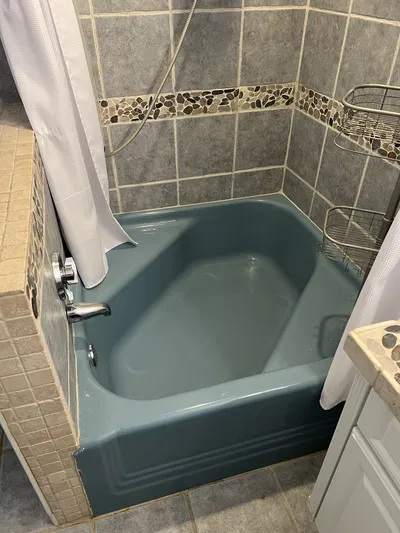
I get asked all the time about removing bathtubs (this one above was in my actual house and the answer was 100% yes, sorry buddy–you’ve GOT to go), replacing decks, finishing basements, and adding accessory apartments. These are exactly the kinds of conversations I want to have with you before you commit, not after.
I don’t want you putting beautiful granite countertops on cabinets that the next buyer is going to rip out. I’ve seen it too many times. Let’s brainstorm before you spend the money, so you can make an informed decision — whether you’re doing it for your lifestyle or for resale value. Hope is not a strategy.
A Personal Moment — and a Little Bit of History
The photo I’m using at the top of this story is one I took myself on Westminster’s town-wide clean-up day — a wonderful community tradition that always reminds me why I love living and working in this area.
And here’s a little news tucked inside that photo: that’s my old house. Someone has bought it, cleaned up the exterior, and there’s a Coming Soon sign out front–it will be coming back on the market. I bought that house when I was 26, back in 1997, for $138,000 — and I still remember thinking, I hope I can afford this. Times were sure different back then. I saw so much potential in it then, and I’m genuinely hopeful that the next buyer will see it too. It’s a special property, and it deserves someone who recognizes that. It’s a good reminder of how much has changed in nearly thirty years of real estate — and how much a little care and attention to a property’s presentation can mean when it’s time to sell.
As always, reach out for anything real estate related — or anything local you think I might be a resource for. I’m here, I’m busy, and I’m happy to help.
If you’d like to talk about getting your home ready to sell, considering multi-generational living, should you stay or should you sell, figuring out the right ownership structure, or finding a good home for that wedding dress — I am genuinely local, genuinely accessible, and I have a lengthy track record of extremely satisfied clients–both buyers and sellers. If you, or anyone you know, are moving to (or from) Central Massachusetts, I’m here to deliver an exceptional experience. My team combines strong communication, proven strategies and deep local expertise to guide throughout the home selling and buying process. If you’re considering the purchase or sale of residential real estate, you owe it to yourself to have a confidential conversation with me.

Jennifer Shenk, Real Estate Broker
Keller Williams Realty North Central
107 Main Street, Westminster
Call/Text: 978 870 9260
Email: jennifershenk@kw.com