
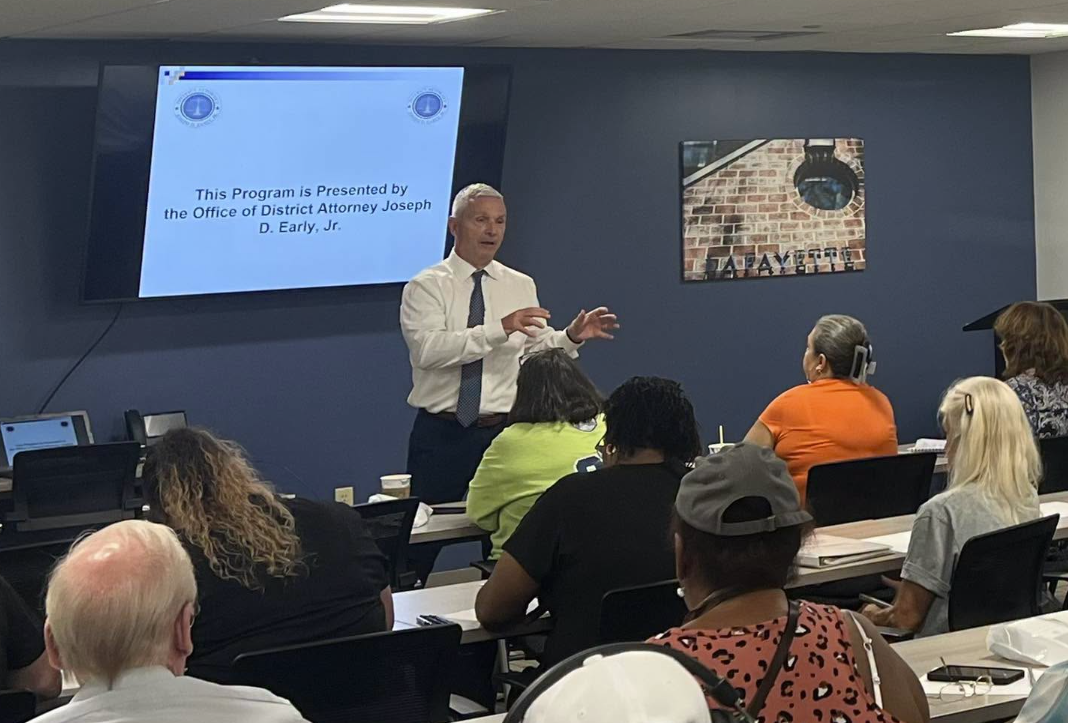
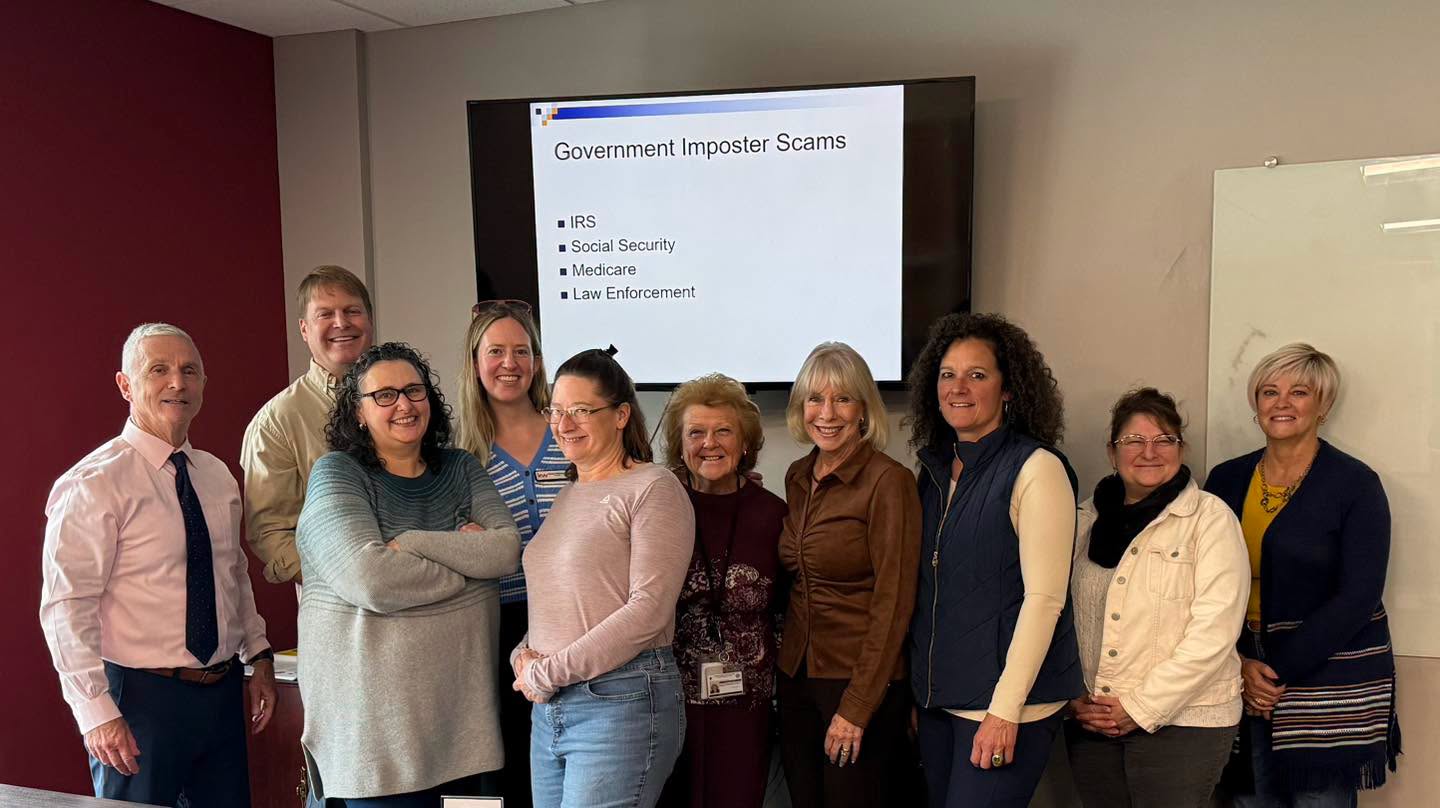
I recently attended an informational session with Kevin Donohue from the Worcester County District Attorney’s office Community Outreach division. I consider myself pretty savvy, but some of the scams Kevin talked about were incredibly creative and nefarious.
I’ve always given my husband a hard time because he never answers his phone. I’m like how are you going to know if someone needs to talk with you? After hearing Kevin’s presentation, maybe I won’t answer my phone either.
Not all that long ago, I encountered someone in my real estate contacts who I was pretty sure was being duped by a scammer, who was pretending to be in a relationship with this person. No amount of gentle, tough love from me opened this person’s eyes to the very real potential, and extreme likelihood, that she was being robbed. How much tough love can I really give as a prospective realtor? The house was sold, not by me, and I’m pretty sure the money went to the imaginary/online boyfriend. I did some research, and as long as a person is considered fit to make their own decisions, there’s really nothing anyone can do. I heard through the grapevine that I wasn’t the only one concerned, but that’s where it ended.
“As part of their Community Outreach team, Kevin Donohue helps coordinate and present educational programs on scam and fraud prevention for seniors, safety talks, and community engagement initiatives across Worcester County’s 60 cities and towns. He frequently collaborates with local police departments, councils on aging, and community groups to deliver crime prevention presentations. All community outreach programs are provided free of charge as a public safety resource for communities within Worcester County.”
— Worcester County District Attorney’s office (read more)
The recent fraud and scam program was pretty scary. I’ll give a few links below to examples of some of the types of scams, but I’d highly suggest you, and also any elderly people in your sphere, attend one of Kevin’s sessions. It is extremely eye-opening.
I share the story below that a friend posted as a warning. Shared with her permission. I think it’s important to note that she’s savvy and attentive to her surroundings — yet when you read it, it’s a bit terrifying to see how real it all seemed. And it almost got her.
SCAM ALERT — What I Did Wrong & What I Did Right
I want to share my recent experience as a warning because I hope it prevents someone else from falling for this stuff. These scammers are getting VERY clever.
WHAT I DID WRONG:
On Wednesday, 9/23, I received an email from someone organizing a group event. I recognized the email address, so I trusted it and clicked the link inside the email. The link didn’t work. I tried it a second time. Still nothing. I am not 100% certain that this was the source of what happened, but I strongly suspect it may have been a phishing link.
On Friday, 9/25, while I was out with friends, I received an email from my bank saying a new payee had been added to my account. It said that if I didn’t make the change, I should contact their fraud department. Unfortunately, I didn’t have my bank account information with me, and I couldn’t get through the automated system without it.
WHAT I DID RIGHT:
I immediately opened my bank app and saw that Discover Credit Card had been added as a payee. I removed it. Then I saw a pending $6,000 transaction. I removed that, too. I also saw a secure message that appeared to say I had approved the transaction. I responded through the secure messaging system, clearly stating that I did NOT authorize the transaction and that it was fraud. Then I CHANGED MY BANK PASSWORD.
The next morning, I called the fraud department as soon as they opened at 9:00 AM. They confirmed that the actions I took the night before had successfully stopped the transaction. But, as a precaution, they froze my online banking and told me I needed to go into my local branch and open a new account because the existing account had been compromised.
My husband and I drove to the bank at 10:00 AM — only to discover the bank was closed. Apparently, Saturday banking hours aren’t a thing anymore!
I wasn’t taking any chances, so I also changed EVERY password associated with my finances — credit cards, retirement accounts, etc. I made sure every account had a unique password and that I wasn’t reusing passwords. I also changed my Google password and checked the devices connected to my Google account. I found one device I didn’t recognize and removed it.
Then came the really crazy part…
At about 6:30 PM, I received a phone call from someone claiming to be “Marcus Smalls” from my bank’s fraud department. He told me someone had gone into the local branch that day with two forms of ID and withdrawn $9,931 from my account. He said the branch manager had approved the transaction but was now under investigation for attempted fraud.
Ummm… we were at that branch that morning, and the bank was CLOSED.
He started asking me questions about when I was last at the bank, whether I felt uncomfortable there, how busy it was, etc. Then he told me someone had opened a $37,000 auto loan and a $17,000 personal loan in my name. At that point I told him I needed to hang up and asked if he could call me back. He agreed.
I immediately called the police and explained what was happening. Dispatch said an officer would call me back.
A few minutes later, “Marcus” called again. He wanted me to open my bank app on my phone. I told him I had deleted it. He asked me to log into my account on my computer. I told him I had changed my password and couldn’t remember it. Then he asked if I had changed my username, too. I told him I had.
At that point, I decided to play along and act very confused. I asked him to hold for a minute. My husband tried calling “Marcus” from his phone. It went straight to a generic voicemail.
When I got back on the call, I told Marcus that I had contacted the police and that an officer would be calling him to confirm that I was not being scammed. Silence. “Hello, Marcus? Are you there?” Nothing. Then he hung up.
I eventually spoke with a police officer, who told me these scammers are getting increasingly clever. And honestly, I almost fell for it. The thing that gave him away was something so simple: he said someone had gone into the bank that day when we knew the bank was closed. That one detail made everything click.
I’m sure “Marcus” and the other scammers like him will keep trying this with other people, so I’m sharing this in hopes that someone recognizes the warning signs before it’s too late.
MORAL OF THE STORY:
Don’t click on links in emails without first investigating whether they’re legitimate. If an email appears to come from someone you know, contact that person another way and ask if they actually sent it. Never give your account number, password, verification code, or other sensitive information to someone who calls you unexpectedly — even if they claim to be from your bank. And if something doesn’t feel right, hang up and call the bank yourself using the phone number on your card or official website.
I made a mistake by clicking that link. Thankfully, I also took several steps that helped protect me before the scammers could get much further. Please learn from my mistake.
“Real estate fraud is becoming more common, more sophisticated, and harder to spot, and AI is making it worse. Whether the scheme involves wire fraud, seller impersonation, title fraud, rental scams, identity theft, or deepfakes, most fraud follows the same pattern: someone pretends to be someone they are not. This resource explains why real estate professionals are frequent targets and gives practical steps to help you prevent, detect, and report fraud.”
— National Association of REALTORS® (read more)
*Bonus for me is I started my Christmas shopping at the event held at my office. Our oldest son works in the DA’s office, and I shopped from the free merchandise table at this info session and got pickle jar openers and Chapstick stocking stuffers for all of his siblings.
Interested in attending one of the DA’s office fraud and scams presentations? Call the main office line at 508-755-8601 or send an inquiry via email to info.worcesterda@mass.gov.
More stories on scams
- Inside the online romance scam that cost a Massachusetts woman her life savings (NBC Boston)
- Romance scams in Massachusetts (Boston Globe, may require a subscription)
- Lynn man sentenced in romance fraud scam (U.S. Attorney’s Office, Massachusetts)
- FCC Consumer Alert: Bank impersonation scams (FCC)
- Online real estate fraud climbed to $275M in 2025 (NAR)