I asked Jay to write a story about our recent visit to the Worcester Art Museum. I wanted to highlight that we went at no charge because of our NARM membership, North American Reciprocal Museum Association, that we purchased over the summer when visiting the Newport Mansions. This grants us free admission to hundreds of museums in all of North America.
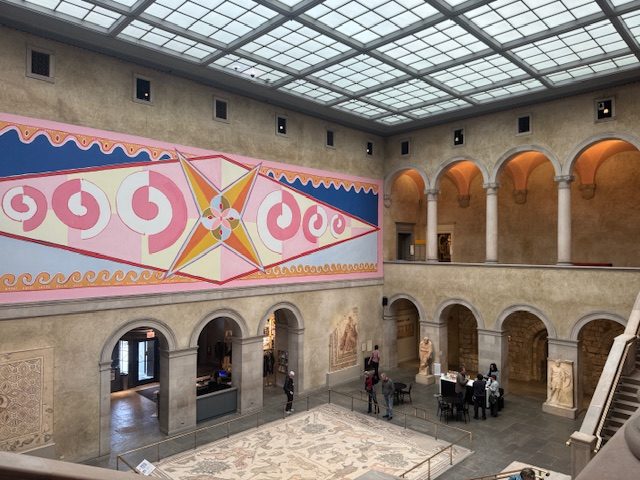
You’ll see by Jay’s story below that he was quite fascinated with the Arms and Armor, since nothing else is mentioned. Since I was the one who took photos of anything other than the armor, I’ll put a few here, so you can see the variety and quality of art throughout the building.
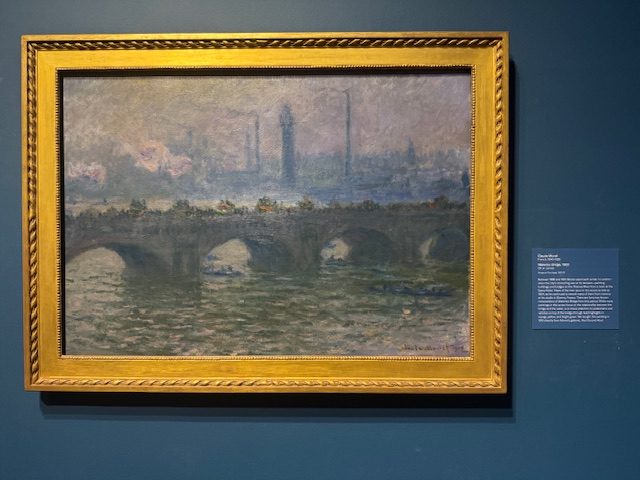
Waterloo Bridge (Claude Monet)
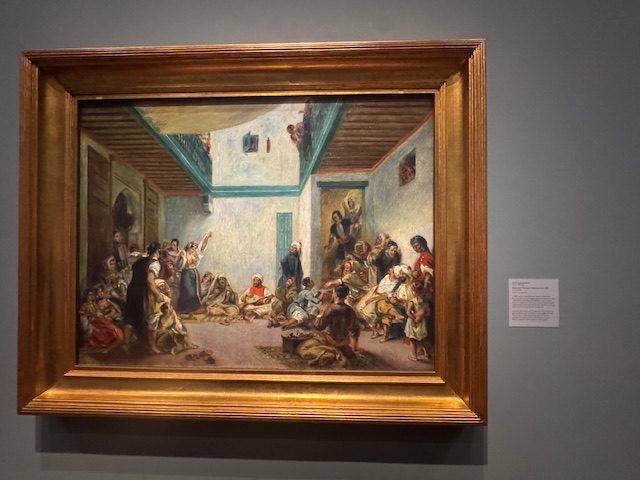
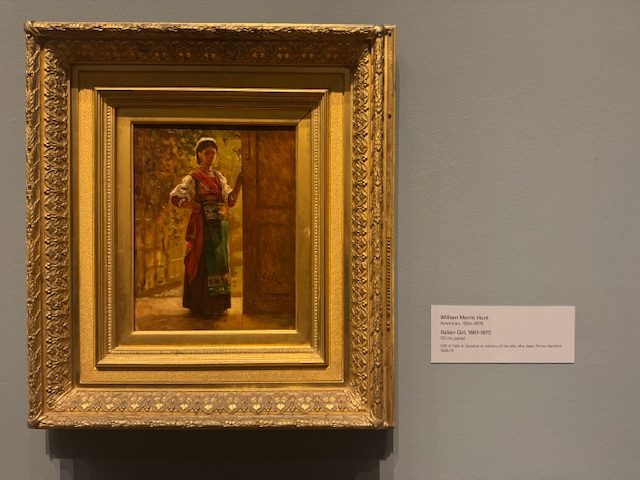
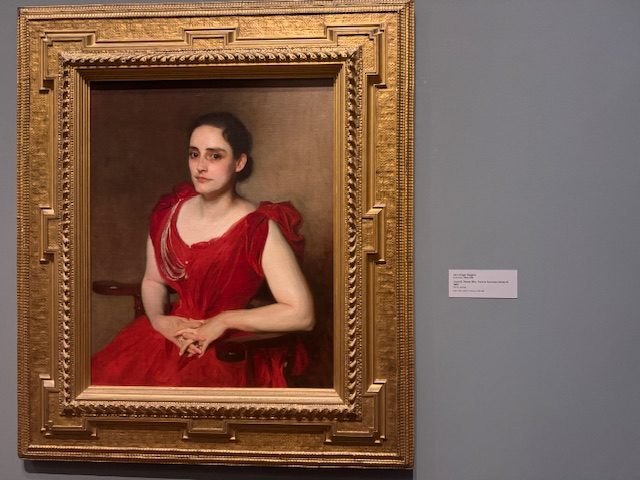
Left to Right: The Jewish Wedding (Pierre-Auguste Renoir), Italian Girl (William Morris Hunt), Lizzie B. Dewey (John Singer Sargent)
Our family has lived here in Central Massachusetts, in the small towns of Westminster, Templeton, and Princeton, for over thirty years, but we’ve never really taken advantage of our proximity to Worcester, mainly because we don’t know our way around Worcester very well. However, thanks to a couple of our kids, one of whom attends WPI, and both of whom know the city well, particularly the restaurants, bars, and shopping areas, so now even Jen and I are getting to know our way around, too. In fact, we just took a trip to the Worcester Art Museum (nicknamed WAM), which led us into the Higgins Armory Collection, which is now a beautifully displayed exhibit section of the Worcester Art Museum, referred to as the Arms and Armor Galleries.
The Higgins Armory Museum, as might be expected, had both an interesting history as well as a large (the second largest in the U.S.) collection of medieval armor. The founder of the Higgins Armory was a businessman named John Woodman Higgins, born in 1874, whose father was Milton Higgins, instrumental in founding the Norton company, and who purchased some other steel companies which were subsequently folded into a new company, the Worcester Pressed Steel Company.
Incidentally, there are a lot of “Miltons” involved in the history of Worcester: Milton Prince Higgins, the father of John Woodman Higgins, worked his entire life for Norton, a major abrasives company, as did his father, also named Milton Higgins. Norton was founded by his grandfather, also Milton Higgins, in 1885. John Higgins’ father, Milton Higgins, attended Milton Academy and Harvard University.
This was when Worcester was known as Steel City, along with Pittsburg, which was right before the outbreak of World War I in Europe, a terrible tragedy for Europe but one which made the Higgins family, and other U.S. industrialists rich.
It was in this era, which was sarcastically called the Gilded Age by Mark Twain, and which not coincidentally was also when the Newport Mansions were built, a time period that began in the late 1800s and lasted up through through the Roaring Twenties, when the Great Depression hit. It was during this gilded age time period that collecting armor from Europe and other places like Japan, became a popular and prestigious hobby for those who could afford it, a hobby which became significantly less expensive as much of Europe was experiencing severe financial hardships from the war, forcing Europeans to sell off collectable armor.
The history of the Higgins Armory Museum building is as unusual and interesting as the collections of armor themselves. Even the fellow who founded the Higgins Armory, John Woodman Higgins, must have been quite the character to collect all the Medieval armor and weapons of war that now make up the Higgins collection of armor; plus he built a museum to put it in. Besides founding the Higgins Armory Museum, John Higgins was also the President of Worcester’s Pressed Steel Company, a company founded by his father and no longer in existence.
The Higgins Armory Museum, built to house John Higgins’ collection of armor, is a spectacular steel and glass art deco building, with an interior designed to look like a medieval castle, in which to display the collection of armor.. As something of a bad sign, the new building opened at the height of the Great Depression, in 1931, and the Museum building itself was a major reason for the ultimate demise of the Higgins Armory Museum:
The museum was extremely popular, with plenty of paying visitors, but it was mainly the operating costs of heating this huge, five story art deco building, consisting mostly of windows, that made the museum financially untenable. An article I saw about it compared it to trying to heat all of New England with a giant radiator (which is what the building sort of looks like).
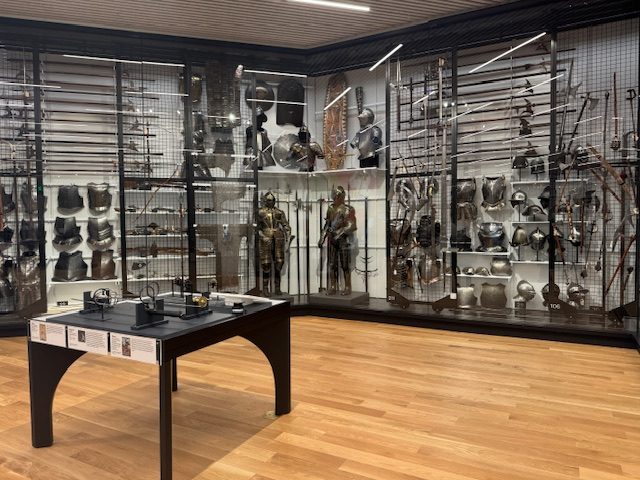
So now the Higgins Armory collection is part of the Worcester Art Museum, and the armor continues to be beautifully displayed.
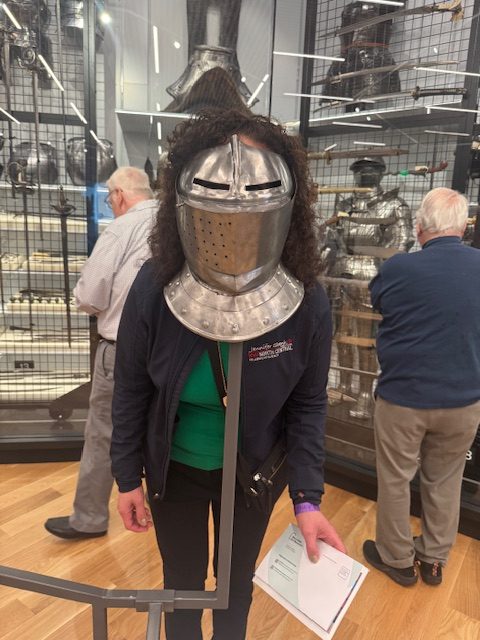
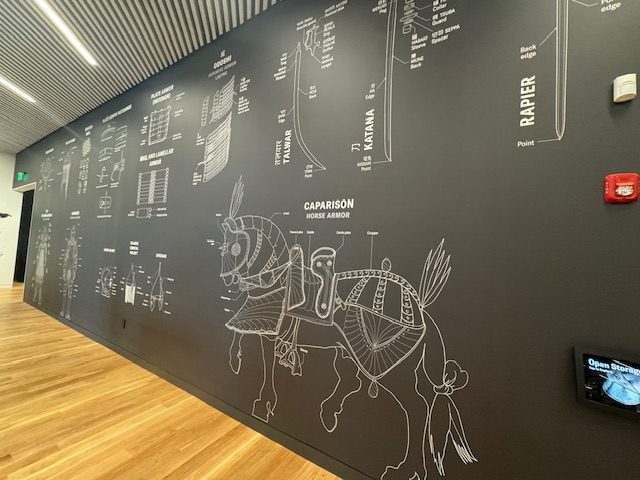
Now I’m no expert in being a knight, but it sure looked hard to get around or into these suits of armor, plus much of the armor was more like works of art than simply protection during wars or jousting matches. In fact, much of this armor wasn’t actually used in fighting. Some of it seems to be simply stylish, while some of the armor is for different purposes than fighting: Field Armor for instance, is armor actually used for combat, while other armor is Jousting Armor, and Parade Armor was used for ceremonies (no one today should complain about having to wear a jacket and tie on occasion, compared to having to wear a suit of armor.)
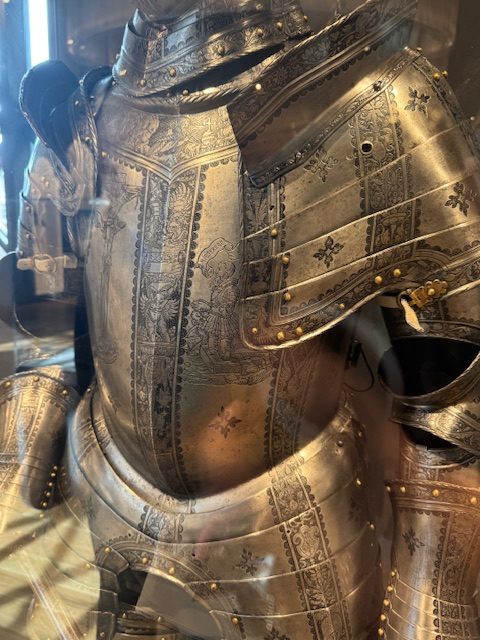
Most armor displayed is European, and dates from the medieval and Renaissance eras in Europe, which go back to around 1400 AD. There are also older artifacts on display, including a Roman Gladiator helmet dating from 100 AD and some ancient Greek helmets also from around that same time period or earlier.
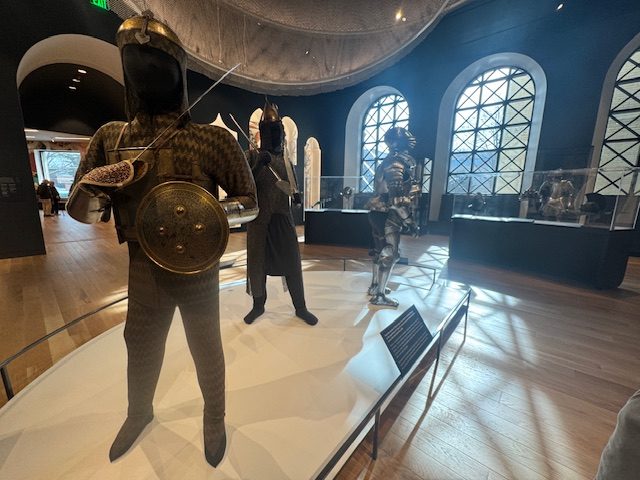
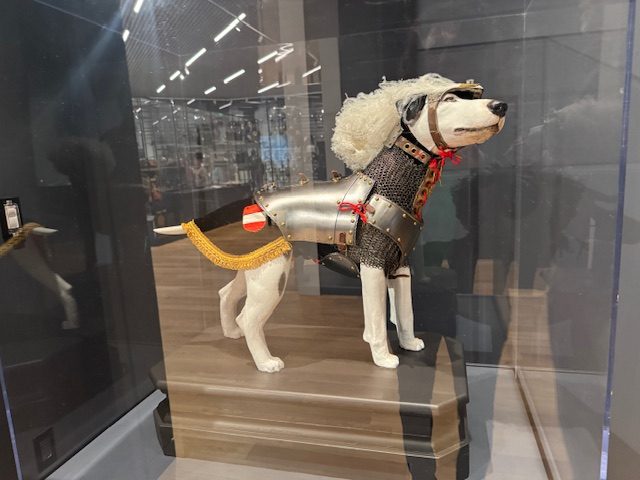
Plus there is also displayed armor from different cultures, such as full suits of samurai armor from early Japan and Sudanese chain mail armor. In fact, there is even armor for jousting horses and hunting dogs on display.
My thoughts, after spending close to an hour looking at the armor on display, were that the jousting armor had similarities to the helmets and pads used in today’s football, and that the showy armor for ceremonies must have been stiflingly hot and uncomfortable, while the armor and weapons actually designed for war and fighting really did look like something from another era, and give us insight into how brutal and short life was back in the days of ‘knights in shining armor’.